Offense or a Fence
7/25/20264 min read


I know you might find this hard to believe, but I actually got triggered the other night by a message on WhatsApp.
Naturally, instead of going to sleep like a reasonable person, I was up half the night compiling a masterful, fiery reply. In all my huffing and a puffing—feeling thoroughly justified, righteously indignant, and drafting rhetorical masterstrokes at 2:00 AM—a single greek word cut straight through my pride.
That word was skandalon.
I can picture everyone who knows me shaking their heads in utter disbelief that I could get offended. Here I was, fully prepared to launch a full-scale digital crusade over a text message, until that single word pulled the rug right out from under my ego.
Did you know the biblical word for offense is skandalon? In its original language, it didn't mean hurt feelings or a bruised ego. It literally referred to the flexible bait-stick, the stick pin, or the trigger mechanism of a hunter's trap. It is the exact piece of the snare where the bait is placed, designed to snap shut the moment a creature steps on it.
When we look through Scripture, we see two very different sides of offense—and understanding who is behind them changes everything.
When Jesus Caused Offense
When Jesus offended people, it was never an accident, nor was it petty. It was deliberate, surgical, and born of deep divine love.
Jesus never offended anyone over His personal rights, His reputation, or His fragile feelings. He didn’t get flustered because someone spoke to Him rudely or questioned His standing. But He was constantly risking offense for the sake of truth. When Jesus spoke, divine truth collided head-on with human pride, and the goal was always revelation.
He exposed hypocrisy, shattered religious self-righteousness, and broke people free from false security. When Jesus brought offense, it was never to destroy the individual—it was to expose the illusion they were trusting in. It forced a critical choice: repentance or rebellion.
Think of the religious leaders of His day, or even His own disciples when He spoke hard truths. Their pride was bruised, but the offense was designed to save them. In Jesus’ hands, offense was a diagnostic tool to reveal the true condition of the human heart.
The Bait of the Enemy and the Lesson of Cain
When we take offense, however, the real author operating behind the scenes is Satan. Jesus clearly identified the nature of the adversary:
"He was a murderer from the beginning, and abode not in the truth, because there is no truth in him. When he speaketh a lie, he speaketh of his own: for he is a liar, and the father of it." — John 8:44 (KJV)
As the father of lies, one of Satan’s chief strategies is deception. He presents us with the "bait" of offense—convincing us that our anger is noble, our pride is justified, and our bitterness is merely self-defense.
The very first picture of this crouching trap in the Bible appears with Cain. When Cain’s offering was rejected and his brother’s was accepted, Cain took deep offense. Notice how God warned him before the trap sprung:
"If thou doest well, shalt thou not be accepted? and if thou doest not well, sin lieth at the door. And unto thee shall be his desire, and thou shalt rule over him." — Genesis 4:7 (KJV)
That phrase "sin lieth at the door" paints the picture of a wild beast waiting to spring, or a trap set right on the threshold. Cain took the bait. He nurtured his offense, allowed self-pity and envy to rot his heart, and ultimately murdered his brother. He became the first tragic warning of what happens when we yield to the fruit of self rather than the fruit of the Spirit.
When we operate in the fruit of self—envy, strife, defense, and self-preservation—we aren't walking in God's wisdom, but in an earthly trap. As James reminds us:
"For where envying and strife is, there is confusion and every evil work." — James 3:16 (KJV)
Whereas the fruit of the Spirit—love, joy, peace, longsuffering, gentleness, goodness, faith, meekness, temperance (Galatians 5:22–23)—requires us to lay our self-life down completely.
Locking Ourselves in Prison
The tragic irony of taking offense is that we do the enemy's work for him. When we bite the bait of a skandalon, we put ourselves in prison and hand our enemy the key.
We build fences around our hearts under the guise of protecting our comfort, our rights, and our reputation. But those same fences quickly become our cell bars. We lock ourselves in a fortress of resentment, isolated, defensive, and spiritually blind.
The ancient writer of Proverbs captured this truth with stark clarity:
"A brother offended is harder to be won than a strong city: and their contentions are like the bars of a castle." — Proverbs 18:19 (KJV)
The offended person builds a fortress to keep others out, only to realize they have barred themselves in.
Jesus warned us about the severe spiritual consequences of harboring offense and unforgiveness toward others in the parable of the unforgiving servant. When the servant refused to extend mercy, his master took action:
"And his lord was wroth, and delivered him to the tormentors, till he should pay all that was due unto him." — Matthew 18:34 (KJV)
When we cling to our "right" to be offended, we hand ourselves over to the inner tormentors of bitterness, anxiety, and spiritual paralysis—trapped by the very adversary who laid the snare in the first place.


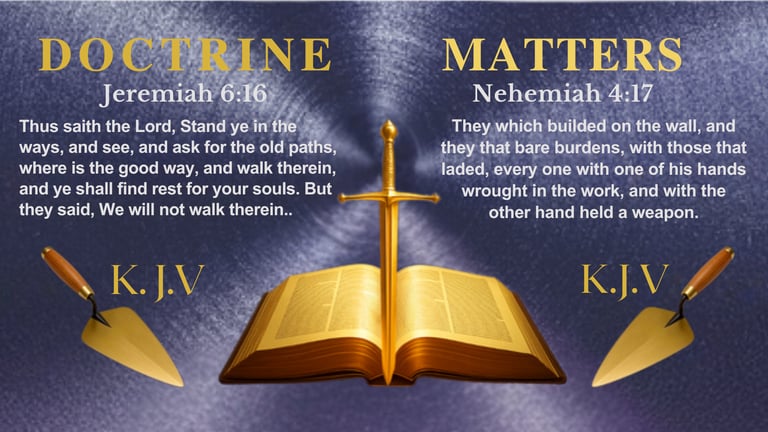
Doctrine Matters
Jeremiah 6:16
“Thus saith the LORD, Stand ye in the ways, and see, and ask for the old paths, where is the good way, and walk therein, and ye shall find rest for your souls. But they said, We will not walk therein.”
King James Version