The Dionysian Root: Rodney Howard-Browne
While the Toronto Blessing is often treated as a spontaneous move of God, it has a clear genealogical origin in the ministry of Rodney Howard-Browne. By analyzing his "Bartender" theology and the physical manifestations he popularized, we find a bridge between ancient mysticism and modern charismatic practice.
The Connection: The 1993 Tulsa Impartation
Before the "Blessing" broke out in Toronto, its future architect, Randy Clark, was a discouraged pastor seeking a breakthrough. In August 1993, Clark attended a pastors' conference at Kenneth Hagin’s Rhema Bible Training Center in Tulsa, Oklahoma, where South African evangelist Rodney Howard-Browne was ministering.
The Transfer: During this meeting, Howard-Browne laid hands on Clark, who describes being "powerfully touched" by the same manifestations of laughter and physical prostration that would later define Toronto.
The Blueprint: Howard-Browne had already spent several years popularized as the "Holy Ghost Bartender," a title he used to describe his role in "serving up" the "new wine" of spiritual intoxication.
The Result: The Invention of "Holy Laughter"
Howard-Browne is the individual responsible for bringing "extra-biblical" manifestations into the charismatic mainstream. When Randy Clark traveled to Toronto five months later, he brought the exact "anointing" and methodology he had caught from Howard-Browne.
The Anti-Intellectual Mandate: Howard-Browne famously instructed his audiences to "stop thinking and start drinking," telling critics that they could not understand God with their minds, only their hearts. This created the "Cessation of the Mind" culture that persists in the NAR today.
The Global Franchise: By serving as the "Source" for Randy Clark, Howard-Browne is the spiritual grandfather of the Toronto Blessing. His "River University" and "The River at Tampa Bay" continue to produce leaders trained in the same ecstatic, disorderly manifestations that were exported to the world in 1994.
Negative Impact Analysis
1. The Shamanic Parallel: Kundalini and "Holy Laughter"
The primary critique of Howard-Browne is that the "anointing" he transfers is indistinguishable from the Kundalini energy found in Hindu and Shamanic traditions.
The Manifestations: In both Howard-Browne’s meetings and Kundalini "Shaktipat" sessions, participants experience spontaneous, uncontrollable laughter, rhythmic jerking (kriyas), and a loss of motor control.
The Transmission: Just as a Guru transfers energy through a touch or a look, Howard-Browne treats the "anointing" as a literal, physical fluid that can be "slung" onto a crowd.
2. The "Bartender" Theology: The Spirit as Intoxicant
Howard-Browne’s branding as "The Holy Ghost Bartender" is more than just a clever nickname; it is a fundamental shift in how the Third Person of the Trinity is viewed.
The Irreverence: By comparing the Holy Spirit to alcohol, the ministry normalizes behavior that is described in the New Testament as "works of the flesh" or "disorder." Where 1 Peter 5:8 commands believers to be "sober and alert," Howard-Browne’s theology demands they be "drunk and senseless."
"Hidden in Plain Sight": The Dionysian Connection
For this exposé, Howard-Browne represents Dionysus—the Greek god of wine, madness, and ecstasy. In ancient rites, the followers of Dionysus sought enthusiasmos (the god within) through ritual intoxication and wild, irrational behavior.
Howard-Browne successfully imported this archetype into the Church under a Christian veneer. While Heidi Baker (Iris) acts as the Messenger who travels between realms, Rodney Howard-Browne is the Provider of the Intoxicant. He provided the "wine" that lowered the Church's defenses, allowing the Toronto Blessing to bypass the discernment of an entire generation.
Sources & Cross-References:
See [Randy Clark Page] for the 1994 Toronto Outbreak.
See [Heidi Baker Page] for the "Iris" Messenger Connection.
Reference Video: The Fire of the Holy Ghost | Rodney Howard-Browne

Doctrine Matters
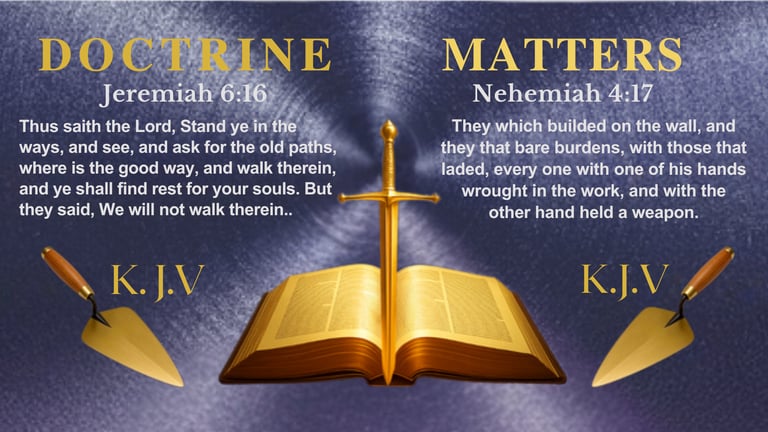
Jeremiah 6:16
“Thus saith the LORD, Stand ye in the ways, and see, and ask for the old paths, where is the good way, and walk therein, and ye shall find rest for your souls. But they said, We will not walk therein.”
King James Version